

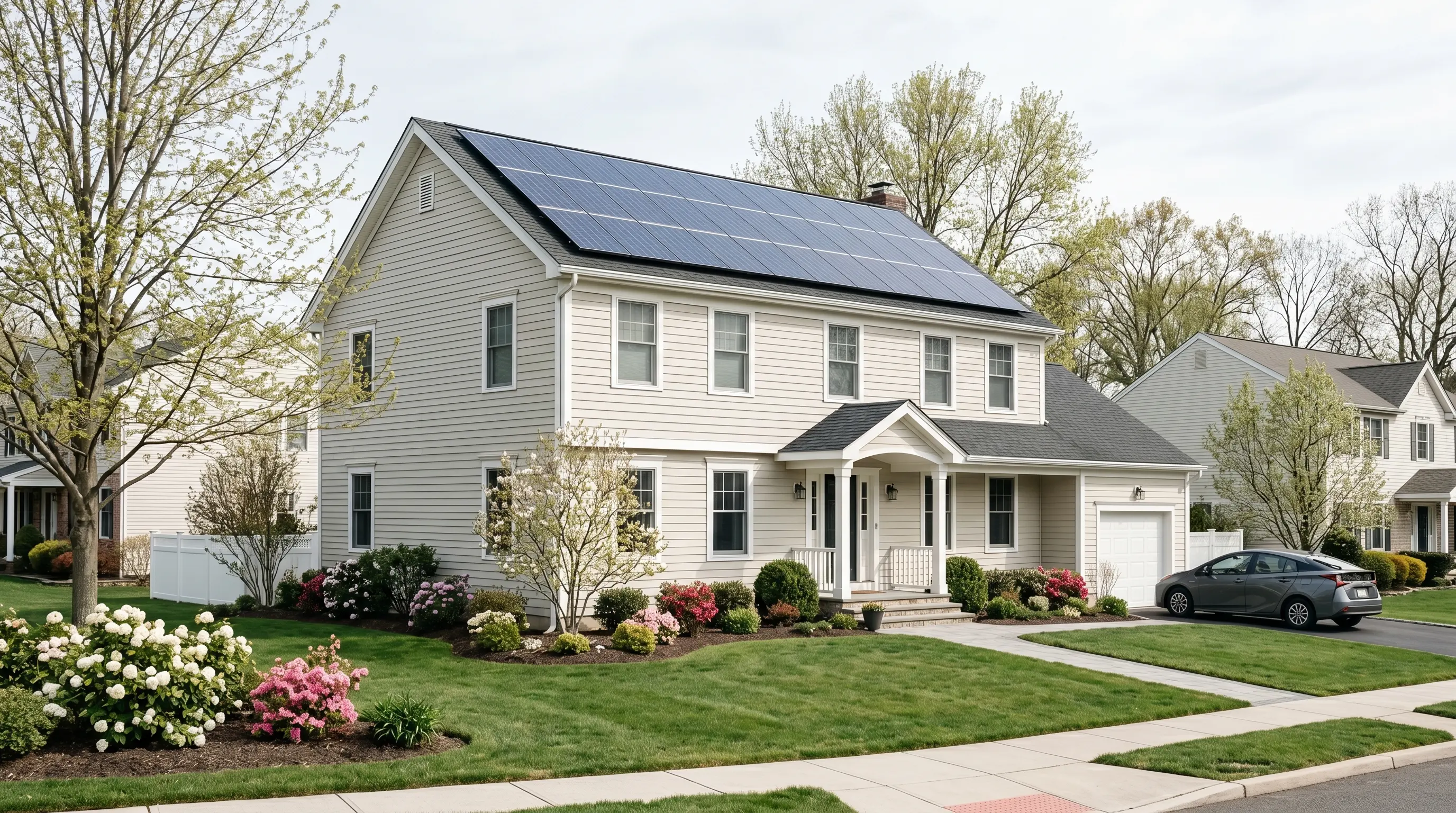
If you are thinking about going solar in New Jersey in 2026, the incentive picture is different than it was a year or two ago. The old federal residential solar tax credit is no longer available for new 2026 residential installs, but New Jersey still offers a meaningful mix of state-level incentives, tax exemptions, and utility-bill savings that can make solar a strong option for the right home.
This guide covers the main New Jersey homeowner-relevant incentives and savings mechanisms to understand before signing a contract.
The Federal Residential Solar Tax Credit Has Ended for New 2026 Installs
The federal Residential Clean Energy Credit under Section 25D is not available for residential solar property placed in service after December 31, 2025. For most New Jersey homeowners buying a solar system in 2026 with cash or a loan, that means the old 30% residential federal tax credit is no longer part of the equation. The same cutoff also affects residential battery storage claimed under Section 25D.
Some leased or PPA systems may still involve business-side federal tax treatment for the company that owns the equipment. That is not the same as a direct residential tax credit for the homeowner, so any installer making that pitch should be able to explain clearly how it affects your pricing.
New Jersey’s Main State-Level Solar Incentive: ADI Under SuSI
New Jersey’s current solar incentive structure sits under the Successor Solar Incentive Program, often called SuSI. The earlier SREC program closed to new applications after the state hit its statutory milestone, and the newer SuSI framework took its place for new projects. For most net-metered residential systems, the relevant path is the Administratively Determined Incentive program, or ADI.
Under ADI, eligible residential systems receive a fixed incentive level of $85 per megawatt-hour of solar electricity produced. Once a system is accepted into the program, that incentive remains available for 15 years. The incentive is issued in the form of SREC-IIs tied to actual system production.
For a simple example, if an 8 kW residential system produces about 10 MWh per year, the ADI incentive value would be about $850 per year, or about $12,750 over 15 years. Actual production depends on roof angle, shading, panel placement, weather, and system design.
Net Metering Still Matters in New Jersey
New Jersey still allows eligible customer-generators to use net metering with the state’s investor-owned electric utilities, including PSE&G, JCP&L, Atlantic City Electric, and Rockland Electric. When your solar system produces more electricity than your home is using at a given time, that excess generation can offset usage on your bill through the state’s net metering framework.
For most homeowners, net metering is one of the biggest pieces of the savings picture because it helps reduce the amount of electricity bought from the grid over the course of the annual billing cycle. Credits can roll forward during that cycle, and any remaining excess is handled through the utility’s annual true-up process under New Jersey rules. Your installer should be able to show you how that works with your utility, your usage, and your expected production.
New Jersey Sales Tax Exemption
New Jersey provides a full sales tax exemption for qualifying solar energy equipment. Since the state sales tax rate is 6.625%, this can cut a noticeable amount off the upfront cost of a system. On a $25,000 system, that exemption is worth about $1,656.25.
New Jersey Property Tax Exemption
New Jersey also offers a property tax exemption for the value added by qualifying renewable energy systems. In practical terms, if solar increases your home’s value, that increase is generally excluded from property tax assessment rather than taxed like a standard home improvement. To claim the exemption, the owner follows the state’s certification process, which includes Form CRES filed with the local tax assessor.
What About Battery Incentives?
The old federal residential credit under Section 25D also no longer applies to new residential battery installations placed in service after December 31, 2025. So if you are adding battery storage in 2026, do not assume the old residential federal tax credit still applies.
New Jersey is also continuing to build out storage policy and program infrastructure. That is worth watching if you are considering solar plus storage, though it should not be presented as a simple universal battery rebate that every homeowner can count on today.
A Simple 2026 Example
Imagine an 8 kW solar system in New Jersey priced at $24,000 and purchased outright.
- Sales tax saved at purchase: about $1,590
- ADI incentive value over 15 years: about $12,750 if the system produces around 10 MWh per year
- Net metering value: depends on your utility rate, annual usage, and how closely your solar production matches your consumption
- Property tax treatment: qualifying added value from the solar system is generally excluded from property tax assessment
Even without the old federal residential credit, New Jersey homeowners can still benefit from a solid stack of state-level support and bill savings. The real numbers depend on your roof, electric usage, shading, utility territory, and system design.
What to Watch in 2026
A few things could still shift:
- future federal tax-law changes
- future ADI pricing or rule changes for new applicants
- future net metering or utility-rate changes
- future storage-program changes in New Jersey
If you are thinking about going solar this year, timing still matters. Program terms for future applicants can change, while systems already accepted into the ADI structure keep their approved incentive terms for the length of their eligibility period.
Ready to See Your Numbers?
Solar Me has been installing residential and commercial solar in New Jersey since 2014. If you want a clear breakdown of how current incentives, net metering, and tax exemptions apply to your home, request a free quote and get numbers based on your roof, utility, and electric usage.
This version is in much better shape. The main thing I would still watch is whether you want to keep the battery section at all, since the strongest homeowner-direct items here are really ADI, net metering, and the two tax exemptions.
