

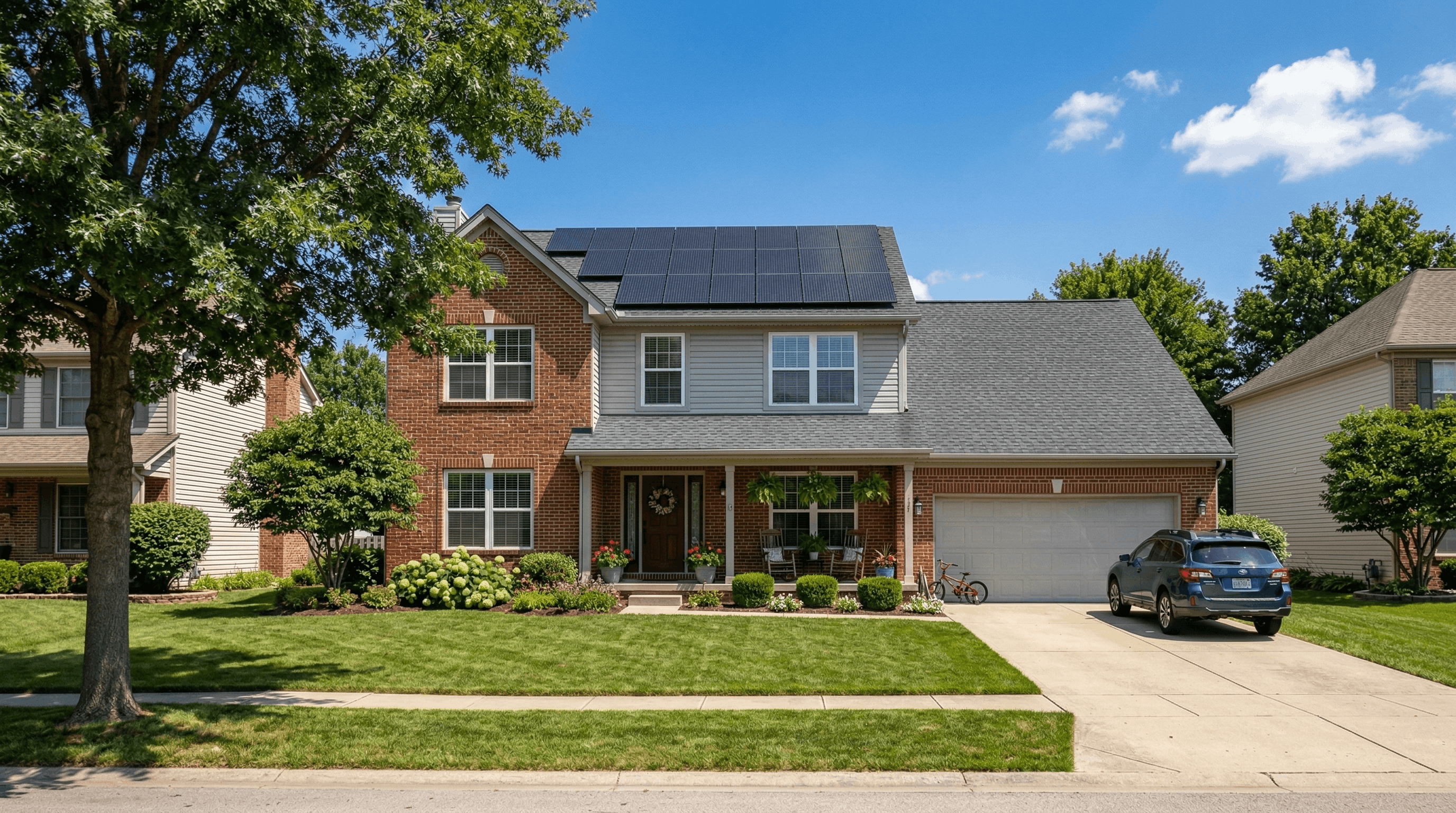
Yes, the federal solar landscape changed in 2025. But here is the good news: solar in 2026 still makes a lot of financial sense, and homeowners who move this year can still take advantage of real incentives and meaningful savings. Let us clear up the confusion and show you exactly what is available right now.
What Happened: The One Big Beautiful Bill
On July 4, 2025, President Trump signed H.R. 1, commonly known as the One, Big, Beautiful Bill, into law. Among its many provisions was the early termination of the Residential Clean Energy Credit, the tax credit homeowners had been using for decades to offset the cost of going solar.
Previously extended through 2034 by the Inflation Reduction Act of 2022, the credit ends for installations completed after December 31, 2025. There was no phase-down period and no gradual reduction.
What Is Gone: The Homeowner-Owned Tax Credit (Section 25D)
The Section 25D credit allowed homeowners who purchased a solar system outright (with cash or a loan) to claim a credit equal to 30% of the total installation cost directly against their federal income taxes.
On a $25,000 system, that was a $7,500 credit. It is gone.
As of January 1, 2026, this credit no longer exists for homeowners purchasing new systems. There is no workaround, no grace period, and no reduced credit rate. If your system's original installation was not completed by December 31, 2025, you cannot claim it.
One important note for 2025 installations: If you had solar installed in 2025 and have not yet filed your taxes, you can still claim the full 30% credit on your 2025 federal tax return, generally due mid-April 2026, or later if you file an extension. You will need to file IRS Form 5695.
Also worth knowing: if you claimed the credit in a prior year and had unused credit remaining, the tax code includes a carryforward provision that allows you to apply that excess to reduce your tax liability in future years. Consult a licensed tax professional for guidance on your specific situation.
What Is Still Available: Federal Incentives Through Leases and PPAs (Section 48E)
Here is the part most homeowners are not aware of: federal solar incentives have not disappeared entirely. They have shifted.
Under Section 48E of the tax code, known as the Clean Electricity Investment Credit, solar companies that own the system through leases and Power Purchase Agreements (PPAs) may be eligible for a federal investment credit that can reach 30% for many residential-scale projects.
Here is how it works in practice:
When you enter a solar lease or PPA, Solar Me owns the panels installed on your roof. Because Solar Me owns the system, we may qualify to claim the Section 48E Clean Electricity Investment Credit, a federal tax credit that can reach 30% of the system cost. We pass those savings on to you through lower monthly electricity rates, which can be meaningfully below what you would otherwise pay your utility company.
You do not receive a tax credit on your personal return. You benefit through a lower bill, starting from day one.
This window is also closing. For Solar Me to access this credit on new projects, construction generally needs to begin by July 4, 2026. After that, the pathway gets significantly narrower. If you are considering a lease or PPA, sooner is better.
One Thing Worth Knowing
New federal rules introduced in 2026 affect which equipment solar companies can use and still qualify for the credit. This is entirely a compliance matter on our end, not something you need to manage yourself. At Solar Me, our systems and equipment are sourced to meet current federal requirements so that the full credit value can be passed on to you.
What About State-Level Incentives?
This is where the picture often gets brighter, depending on where you live.
State solar incentive programs generally did not change as a result of this federal law. Depending on your state, you may still have access to:
- Net metering programs that provide utility bill credits for excess energy your panels send back to the grid
- Solar Renewable Energy Certificate (SREC) programs that pay you cash for the clean electricity your system produces
- Sales tax exemptions on the purchase of solar equipment
- Property tax exemptions on the added home value that solar creates
- State rebate or incentive programs administered by your utility or your state energy office
Some states, particularly in the Northeast and Mid-Atlantic, maintain strong incentive programs that can make solar highly cost-effective even without the federal credit for purchased systems. Other states have fewer programs in place.
The best way to understand what is available in your specific area is to speak with the Solar Me team. We know which programs are currently open, funded, and accepting new applicants in your area.
Is Solar Still Worth It in 2026?
For homeowners using a lease or PPA: the financial case remains compelling in most markets. You still access the economic value of the federal credit indirectly, there is typically no upfront cost, and you start saving from day one. The trade-off is that you do not own the system, which has implications for how the agreement is handled if you sell your home, and for any state incentive programs that require direct ownership.
For homeowners buying a system outright with cash or a loan: the math has changed without the 30% federal credit, and payback periods are longer than they used to be. Solar still protects you against rising utility rates over time and adds real value to your home. State incentives in many areas can still meaningfully offset the cost. It is worth running the numbers with the Solar Me team to see where you stand.
The right choice depends on your financial situation, your state's incentive landscape, your current electricity rates, and your long-term goals. There is no single right answer for every homeowner, which is exactly why getting an informed, personalized quote from Solar Me matters more than ever right now.
The Bottom Line
The federal solar policy landscape changed more dramatically in 2025 than it had in two decades. The homeowner-purchased solar tax credit is gone. That is real.
But solar is not gone. Lease and PPA options still carry indirect federal incentive value. State programs in many areas remain strong. Electricity rates continue to rise nationwide. And solar panels themselves are more efficient and more affordable than they have ever been.
The most important thing you can do right now is get accurate, current information about what is available in your specific area, and move before the remaining federal windows close entirely.
Solar Me USA helps homeowners navigate solar financing, incentives, and installation. Have questions about what programs are available where you live?
👉 Schedule Your Free Solar Review
📞 Or call (844) 734-6610.
Disclaimer: This article is for informational purposes only and does not constitute tax, legal, or financial advice. Tax laws are complex and subject to change. Please consult a licensed tax professional regarding your specific circumstances.
