

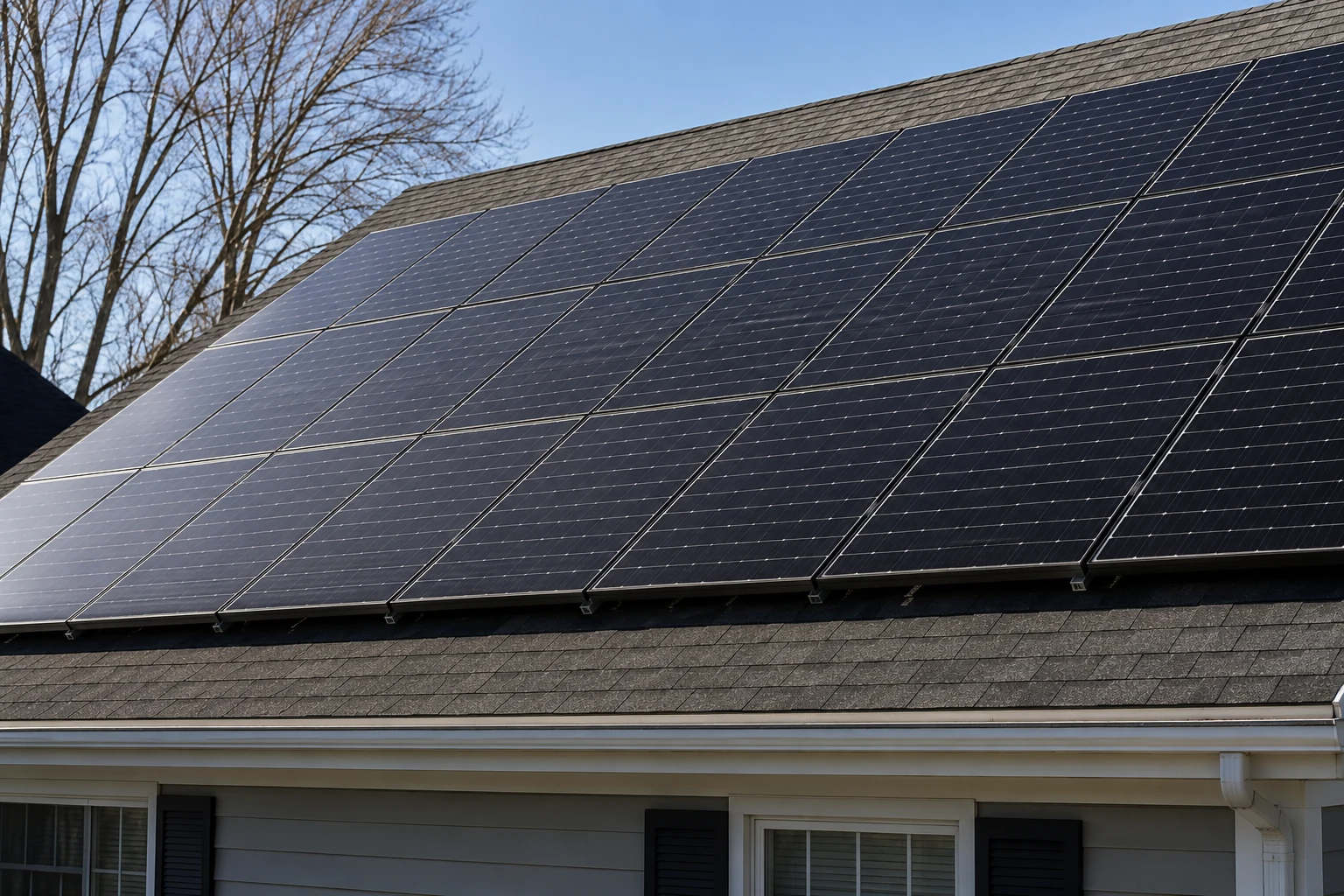
More homeowners are asking for American-made solar panels — and in 2026, it's a smarter question than ever. Between shifting tariffs, supply-chain swings, and a fast-changing policy landscape, where your panels are made can affect their price, their reliability, and how well your warranty actually holds up.
So are U.S.-made panels worth it? Here's a straight, no-hype look for New Jersey homeowners.
What "American-made" really means
This is where it gets a little nuanced. A solar panel has many parts — cells, wafers, glass, frames, and the final assembly. A panel labeled "American-made" might be fully manufactured in the U.S., or it might be assembled here using some imported components.
That's not a gotcha — most major brands use global supply chains. But it's worth knowing, because "Made in USA," "assembled in USA," and "U.S. domestic content" can mean different things. A good installer can tell you exactly what you're getting and where it's made.
The encouraging news: U.S. solar manufacturing has expanded significantly in recent years, with major panel factories now operating in states like Georgia and the Carolinas. American-made options are more available — and more competitive — than they were even a few years ago.
The real benefits of U.S.-made panels
For a New Jersey homeowner, the case for American-made panels usually comes down to four things:
- More price stability against tariffs. Imported solar equipment has been subject to shifting tariffs that can raise prices with little warning. Domestically made panels are more insulated from those swings, which can mean steadier pricing.
- Quality and reliability. U.S. factories are held to strict manufacturing and labor standards. Many American-made panels are high-efficiency, premium products with strong durability track records.
- Warranty support that's easier to honor. A warranty is only as good as the company standing behind it. Buying from established manufacturers with a strong U.S. presence can make warranty claims smoother years down the road.
- Supporting American jobs and supply chains. For many homeowners, keeping their investment dollars closer to home is reason enough.
What about tax credits and "domestic content"?
This is the part that's changed the most, so let's be clear and current.
The federal residential solar tax credit (the 30% credit homeowners used to claim) ended on December 31, 2025. As of 2026, a homeowner who buys their own system does not receive that federal credit. Because of that, the federal "domestic content bonus" you may read about does not add value for a typical homeowner purchase — that bonus applies to commercial-style tax credits.
Where it can still matter:
- Commercial solar projects that still meet current federal deadlines may qualify for credits that include a domestic content adder — so for businesses, American-made equipment can carry a direct tax advantage.
- Leased / PPA residential systems, where a third party owns the system and claims the commercial credit, can also factor in domestic content.
For a NJ homeowner buying their own system in 2026, think of American-made panels as a quality, reliability, and price-stability decision — not a federal tax move. (For the bigger picture on what changed, see Solar Federal Policy Changes in 2026.) The good news is that New Jersey's own incentives — like SREC-II earnings, the sales-tax exemption, the property-tax exemption, and net metering — still make solar a strong investment regardless of where your panels are made.
Are American-made panels more expensive?
Sometimes, slightly — but the gap has narrowed, and it's often smaller than people expect. And when you factor in tariff-driven price swings on imported equipment, plus the long-term value of a panel that performs reliably for 25-30 years, the difference can be well worth it.
The smartest approach isn't "cheapest panel" or "American at any cost." It's matching the right equipment to your roof, your budget, and your goals — and an experienced installer will show you both options side by side.
What Solar Me offers
Solar Me offers American-made solar panels, inverters, and racking by request, alongside the other leading brands we install. We'll walk you through which components are U.S.-made, how they compare on price and performance, and which makes the most sense for your home — no pressure either way.
You can also browse our overview of the top solar panel brands for New Jersey homes and our residential solar panel installation service to see how it all fits together.
Frequently asked questions
Are American-made solar panels worth it?For many homeowners, yes — mainly for reliability, warranty confidence, and protection from tariff-driven price swings. The price premium is often smaller than people expect.
Do American-made panels qualify for a bigger tax credit?Not for a typical homeowner in 2026. The federal residential solar credit ended after 2025, so the "domestic content bonus" now applies mainly to commercial and third-party-owned (leased/PPA) systems.
Which solar panels are made in the USA?Several major manufacturers now produce panels in U.S. factories. Because models and sourcing change over time, ask your installer for current, specific options — Solar Me can show you exactly what's available.
Are American-made panels higher quality?They're made under strict standards and many are premium, high-efficiency products. Quality ultimately depends on the specific brand and model, not just the country of manufacture.
Want American-made options for your NJ home?
If keeping your solar investment U.S.-made matters to you, we'll show you the best American-made panels for your roof and budget — and how they stack up against the alternatives. Request a free consultation with Solar Me to compare your options.
