

It's one of the first questions every homeowner asks before going solar: how long do solar panels actually last? It's a fair question — you're putting equipment on your roof that you expect to pay for itself and then some.
The short answer: most modern solar panels last 25 to 30 years or more, and they don't suddenly stop working at the end. Here's what that really means, what affects it, and what your options are when panels finally age out.
The short answer: 25-30+ years
When manufacturers talk about a panel's "lifespan," they're usually referring to its performance warranty — typically 25 years. That's not an expiration date. It's the period during which the manufacturer guarantees the panel will still produce at least a certain percentage of its original output (often around 84-92%, depending on the brand).
In practice, plenty of panels keep generating useful power well past the 25-year mark — just at a gradually reduced level. So "lasting 25-30 years" doesn't mean your panels die at year 26. It means they slowly produce a little less over time.
What "degradation" actually means
Solar panels lose a small amount of efficiency each year. This is called degradation, and it's completely normal.
Most quality panels degrade at roughly 0.5% per year (some premium panels are even lower) — a median rate confirmed by long-term research from the National Renewable Energy Laboratory (NREL). That adds up gently: a panel producing 100% in year one is typically still producing around 88% after 25 years. The first year often sees a slightly larger one-time dip as the panel settles in, then it levels into that slow, steady curve.
The practical takeaway: degradation is predictable and minor. It's not something most homeowners ever "feel" on their electric bill in a given year.
What can shorten a solar panel's life
Panels are built to handle decades of weather, but a few things can cut their useful life short:
- Poor installation. Bad flashing, loose racking, or sloppy wiring causes problems long before the panels themselves wear out. (This is why choosing the right installer matters so much.)
- Physical damage. Hail, falling branches, and severe storms can crack glass or damage cells.
- Critter damage. Squirrels and birds nesting under panels chew wiring and create hot spots.
- Microcracks and hot spots. Tiny cracks from manufacturing defects or rough handling can grow over time and drag down output.
- Inverter failure. Here's the catch most people miss — your inverter usually wears out first. String inverters often last 10-15 years, while microinverters tend to last longer. A failing inverter can look like "dying panels" when the panels are actually fine.
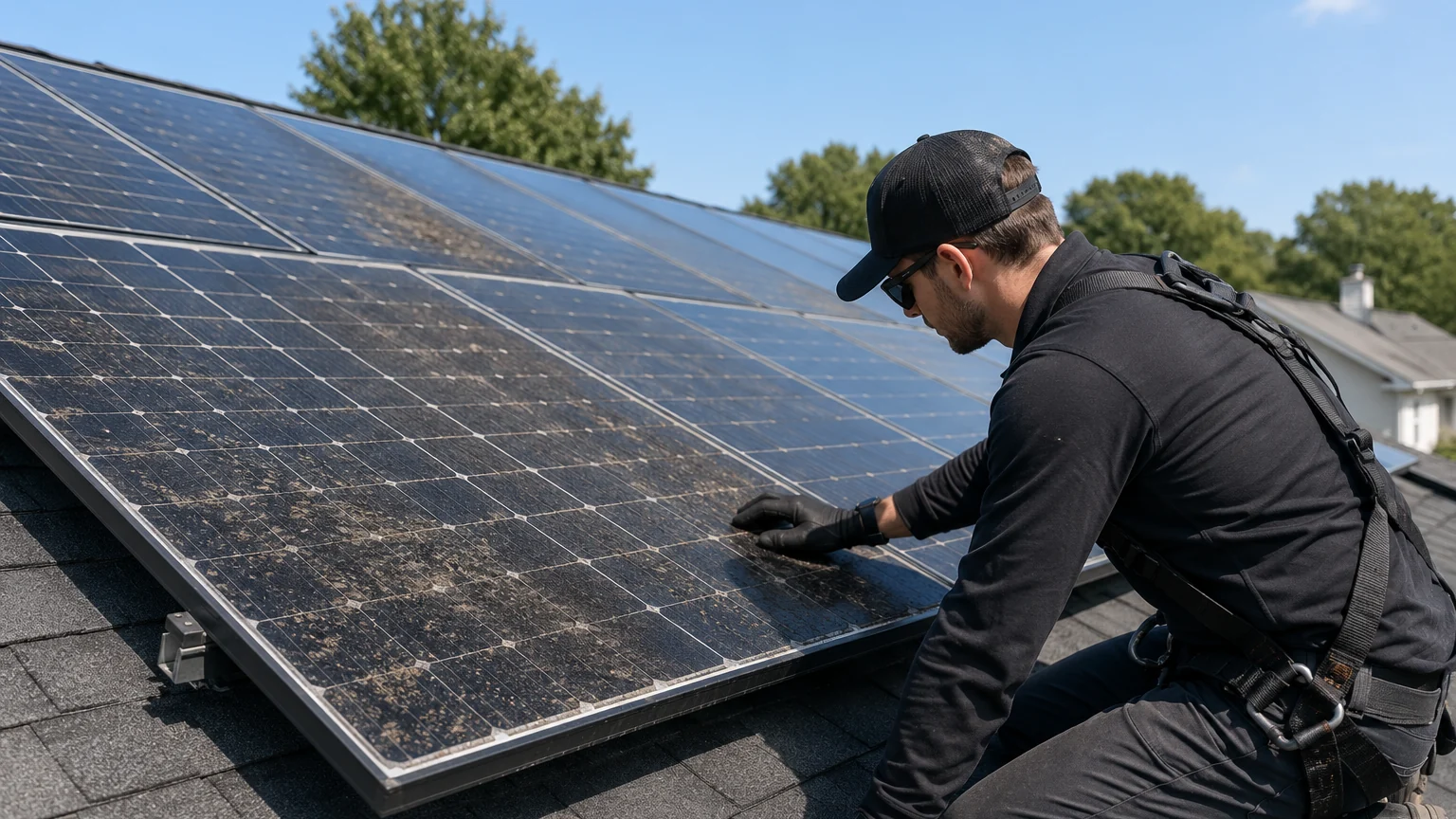
If your system is producing less than it used to, don't assume the panels are shot. A quick diagnostic and repair visit can pinpoint the real cause — and it's often something simple and inexpensive.
How to make your panels last longer
The good news: solar requires very little upkeep. A few habits help you get the full 25-30+ years:
- Monitor your production. Most systems include an app that tracks output. Watching for unexpected drops is the easiest way to catch issues early — more on the benefits of monitoring and maintenance here.
- Keep panels reasonably clean. In NJ, rain handles most of this, but heavy pollen, dust, or bird droppings can build up.
- Address pest and storm damage promptly. Small problems get expensive when ignored.
- Get an occasional professional checkup, especially if your system is older or you've never had it inspected.
What happens when panels reach the end of their life
Eventually, you may decide your decades-old system is producing too little to justify keeping it as-is. You generally have three options:
- Repair or partial upgrade. Often you don't need to replace everything. Swapping a failed inverter or a few underperforming panels can restore most of your production. We cover this in Can You Replace or Upgrade Just Part of a Solar System?
- Full replacement (repowering). If your panels are very old and inefficient, replacing them with modern, higher-output panels can dramatically increase production in the same roof space.
- Removal or decommissioning. If you're retiring the system or replacing your roof, panels can be safely removed, reinstalled, or responsibly recycled. See our guides on solar removal and reinstallation and proper decommissioning.
Frequently asked questions
Do solar panels stop working after 25 years?No. The 25-year figure is usually the performance warranty, not an off switch. Most panels keep producing power after that — just at a gradually reduced output.
How much do solar panels degrade each year?Typically about 0.5% per year for quality modern panels, often with a slightly larger dip in the first year before it levels off.
What part of a solar system fails first?Usually the inverter, not the panels. String inverters commonly last 10-15 years and may need replacing once during the system's life.
Is it worth maintaining old solar panels?Often, yes. A simple repair — like replacing an inverter or a couple of panels — can be far cheaper than a full replacement and can restore most of your output.
Have an aging or underperforming system?
If your panels are getting up there in age or your production isn't what it used to be, Solar Me can inspect your system and tell you honestly whether it needs a repair, a partial upgrade, or a full replacement. Schedule a free consultation and we'll help you get the most life out of your investment.
