

Updated: August 2025
A lot of homeowners don’t realize their solar system is underperforming until months later—when they notice their electric bill creeping back up, or the monitoring app starts throwing warnings they don’t understand.
The good news: most solar performance issues are detectable and fixable. The bad news: many installers won’t service systems they didn’t install, which is why “orphan systems” (installer out of business or unresponsive) are becoming a real problem in New Jersey.
This guide gives you a clear way to spot issues early and take the right next step.
The most common signs your solar system is underperforming
Here are the red flags that show up again and again:
1) Your electric bill is rising even though nothing changed
If your usage is steady but your bill is trending up, the system may be producing less than it should—or your credits aren’t being applied the way you expect.
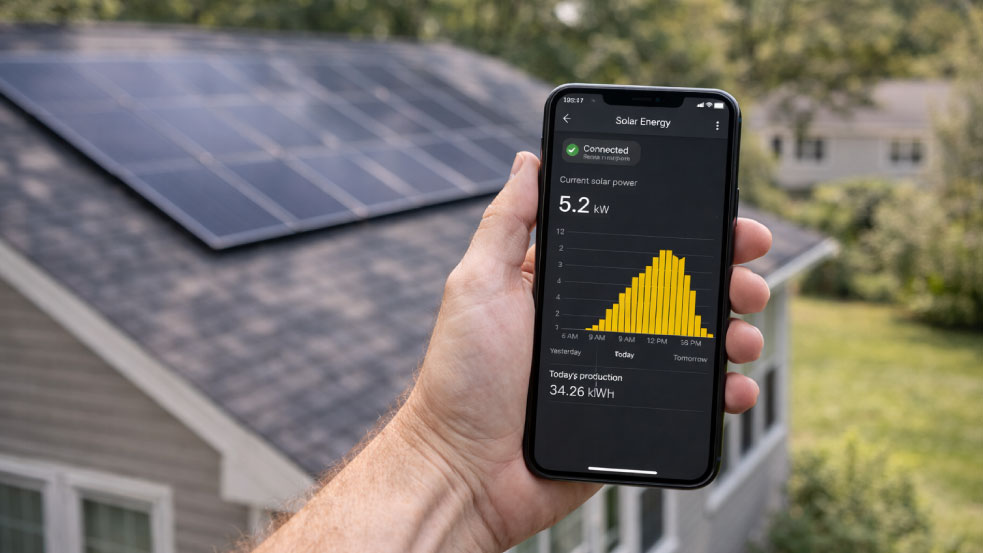
2) Your monitoring app shows “0 production” (or missing days)
If your app shows flatline production, gaps, or no data at all, it could be:
- a real production issue, or
- a monitoring/comms issue (internet gateway, cellular modem, app config)
Either way, it’s worth investigating.
3) Your inverter is showing a warning light or error code
- Solid red light
- Blinking patterns
- “Grid fault,” “Arc fault,” “Ground fault,” “Isolation fault,” etc.
These warnings matter. Some are simple resets; others require real troubleshooting.
4) Production dropped compared to last year
Solar output naturally varies by weather, but year-over-year drops (in the same season) often indicate:
- shading changes (trees grew)
- dirty panels
- failing inverter/optimizer/microinverter
- wiring issues
- critter damage
5) Your system “looks fine” but savings don’t match expectations
This is common with systems that are:
- incorrectly sized
- partially offline (one string down)
- misconfigured in monitoring
- not credited correctly at the utility meter
Quick “DIY checks” you can do in 10 minutes
Before you call anyone, these checks can help you narrow down what’s happening.
Check your inverter
Look for:
- green/normal light
- red/fault light
- a display message or error code
Take a photo of it. That’s useful for any technician.
Check your monitoring app
Look at:
- today’s production vs recent days
- any “alerts”
- whether data is updating in real time
If you have multiple arrays or sections, compare them.
Check your breakers and disconnects
Sometimes the simplest answer is the right one:
- tripped breaker
- shutoff/disconnect accidentally turned off after another contractor visit
Walk the property
Look for:
- new shade (trees, additions)
- obvious damage (panels shifted, cracked glass)
- nests/debris under panels
- exposed conduit or chewed wiring
Important: Don’t touch wiring. Just observe and document.
What typically causes underperformance in NJ (real-world list)
Here are the most common issues we see:
1) Inverter or optimizer/microinverter failures
This is the big one. One failed component can reduce output dramatically—sometimes without the homeowner noticing for months.
2) Monitoring or communications issues
Your system may be producing fine but not reporting correctly due to:
- Wi-Fi changes
- router replacement
- cellular modem issues
- gateway failure
3) Critter damage (squirrels/rodents)
Chewed wiring is extremely common in NJ. It can cause:
- intermittent faults
- partial shutdown
- complete system failure
4) Loose or corroded connections
Especially in older systems or systems exposed to moisture intrusion.
5) Shading changes over time
Trees grow. Neighbor’s trees grow. New construction happens. Small shade can have a big impact depending on system design.
6) Utility/grid-related faults
If the inverter sees unstable voltage/frequency or repeated grid events, it may shut down for safety.
“My installer is out of business.” What now?
You’re not alone.
Many homeowners are stuck with an underperforming system and nobody to call because:
- the original installer folded
- the company was acquired and stopped servicing legacy installs
- they only support systems they installed
This is exactly where a solar diagnostic service matters.
A qualified service team can:
- identify the system type and equipment
- restore monitoring access
- diagnose production issues
- provide repair options (including parts sourcing, warranty coordination where possible)
What a professional solar diagnostic should include
If you’re hiring someone, don’t accept “we’ll take a look” as the whole plan.
A real diagnostic typically includes:
- system overview (make/model, architecture, expected production)
- inverter and component checks
- electrical measurements and fault tracing as needed
- monitoring verification and restoration
- a written summary: what’s wrong + repair options + recommended next steps
That last part matters because it prevents “mystery fixes” and repeat visits.
Should you repair, upgrade, or replace the system?
This depends on age and condition.
Repair makes sense when:
- a single component failed
- wiring damage is localized
- the system is otherwise healthy and producing well historically
Upgrade makes sense when:
- the system is older but the roof and structure are solid
- you want battery backup
- you want improved monitoring or performance
- you’re already doing roof work (perfect timing)
Replace / repower makes sense when:
- the system is near end-of-life
- multiple components are failing
- warranties and parts availability are limited
- you want to significantly increase capacity
How SolarMe helps (service-first)
SolarMe doesn’t just install new systems—we help NJ homeowners get existing systems working again, including orphan systems.
Our service approach is straightforward:
- diagnose the issue
- restore monitoring and visibility
- repair what’s repairable
- give you clean options if an upgrade or repower makes more sense
If your system is underperforming, the worst move is to ignore it. The sooner you diagnose the cause, the faster you get your savings back.
Ready to find out what’s really going on?
If your app looks wrong, your bill is creeping up, or your installer is gone, schedule a diagnostic consult and we’ll help you get answers quickly.


