Last Updated: July 2025
If you’ve ever heard scratching under your solar panels, noticed your system production dropping for no clear reason, or found debris near the roofline—there’s a good chance you’re dealing with critter activity.
In New Jersey, animals nesting under solar arrays is common. Squirrels, birds, and rodents love the warm, protected space beneath panels. Unfortunately, they also chew wiring, build nests, and create damage that can take your system partially (or fully) offline.
This post breaks down how to spot the problem early, what it can cost if ignored, and how critter guards actually work.
Why critters love solar panels
Solar arrays create a perfect “crawl space”:
- Shelter from rain, wind, and predators
- Warmth from the roof and sun exposure
- A safe place to nest and store food
Once one animal finds it, others often follow.
The most common signs of critter damage
Here are the red flags homeowners notice first:
1) Scratching, tapping, or movement sounds
Especially early morning or at night. If it sounds like something is in your attic, it may actually be under the array.
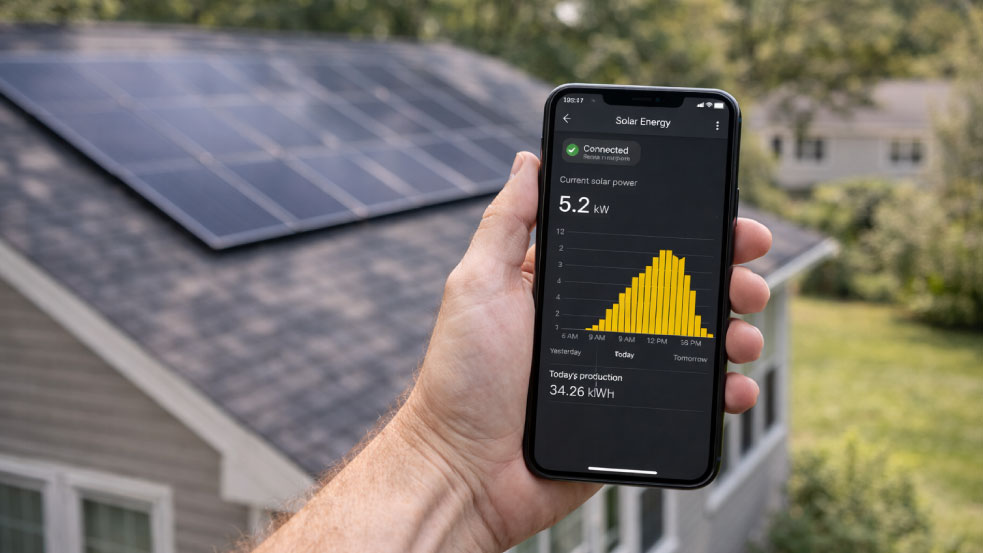
2) Sudden drop in solar production
Chewed wiring or damaged connections can cause:
- intermittent faults
- one section of the system going offline
- inverter warnings and shutdowns
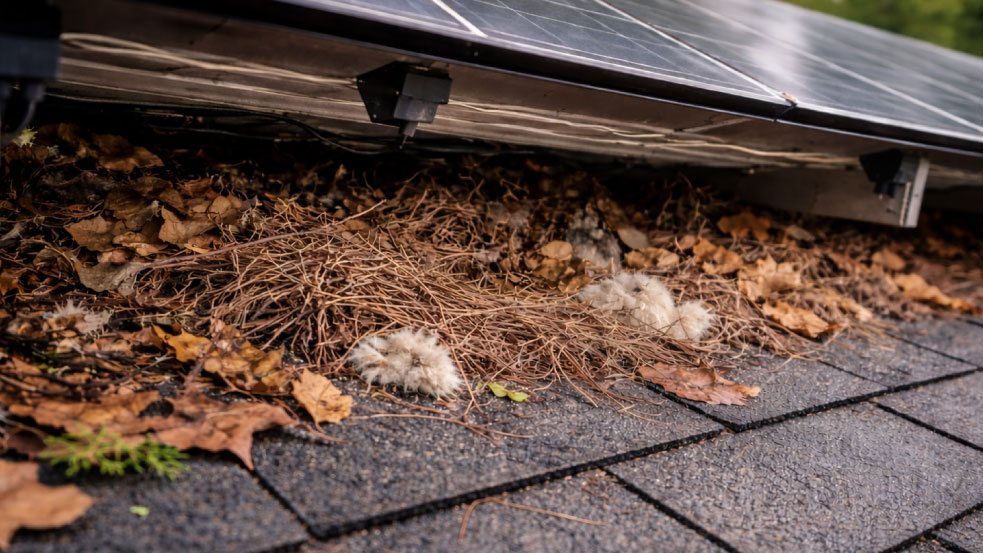
3) Visible nesting material or debris near the roof edge
You may see:
- leaves, twigs, insulation fluff
- droppings
- seeds or food caches
4) Error codes or inverter faults
Common issues triggered by critters:
- arc faults
- ground faults
- isolation faults
5) Birds around the array more than normal
If birds consistently perch and gather near the array edges, it’s often a sign of nesting beneath.
Why it matters (risks homeowners don’t expect)
Critter damage isn’t just “annoying.” It can create real problems:
Electrical safety risk
Chewed conductors and exposed wiring can create arcing or ground faults—issues that must be addressed quickly.
Lost solar savings
A system can underproduce for months without the homeowner realizing it. Small drops add up.
Roof and water damage
Nests trap moisture and debris. Over time, that can accelerate roof wear and create leak risk around penetrations and flashing.
Insurance headaches
When solar and roof issues overlap, unclear responsibility can create delays and finger-pointing.
What is a “critter guard” (and does it actually work)?
A critter guard (also called solar mesh or solar skirt) is a durable barrier installed around the perimeter of the solar array to block animals from entering underneath.
Done correctly, it:
- seals the edges without trapping moisture
- prevents entry while maintaining airflow
- survives weather and UV exposure
- is secured in a way that won’t compromise the roof
Yes—critter guards work. But only if they’re installed properly and paired with cleanup/repair when needed.
The right way to fix the problem (step-by-step)
If critters have already moved in, prevention alone isn’t enough. Here’s the proper order:
Step 1: Inspection & diagnosis
We identify:
- entry points
- nesting damage
- wiring/conduit issues
- production impact
Step 2: Clean-out (if needed)
Remove nesting material and debris safely. Sanitize if there’s contamination.
Step 3: Repair any solar damage
This can include:
- replacing chewed wiring
- repairing conduit
- re-terminating connections
- restoring monitoring
Step 4: Install critter guards
Seal the perimeter and fix the weak spots so the problem doesn’t repeat.
What it typically costs (and what drives the price)
Critter guard work varies by:
- array size (panel count and perimeter length)
- roof pitch and access
- whether repair work is needed (wiring, conduit, inverter issues)
- how long the infestation has been present
The key point: preventive guards are cheaper than repairs.
If you’re installing solar now, adding critter protection early is usually a smart move.
When to do it (timing matters)
Best times:
- Right after install (prevent the first nesting)
- During a roof + solar detach/reset (easy access)
- At the first sign of noises or production drops (stop it before wiring damage spreads)
How SolarMe helps NJ homeowners
SolarMe handles this as a solar service issue—not a generic pest job.
We:
- inspect and diagnose the solar impact
- repair any system damage
- install critter guards built for roof + array longevity
- verify production and monitoring after completion
If you’re hearing noises, seeing production issues, or you simply want to prevent a problem before it starts, we’ll help you lock it down the right way.
Ready to protect your system?
If you suspect critters under your panels—or you want protection installed proactively—schedule a quick consult. We’ll confirm what’s happening and recommend the cleanest fix.