

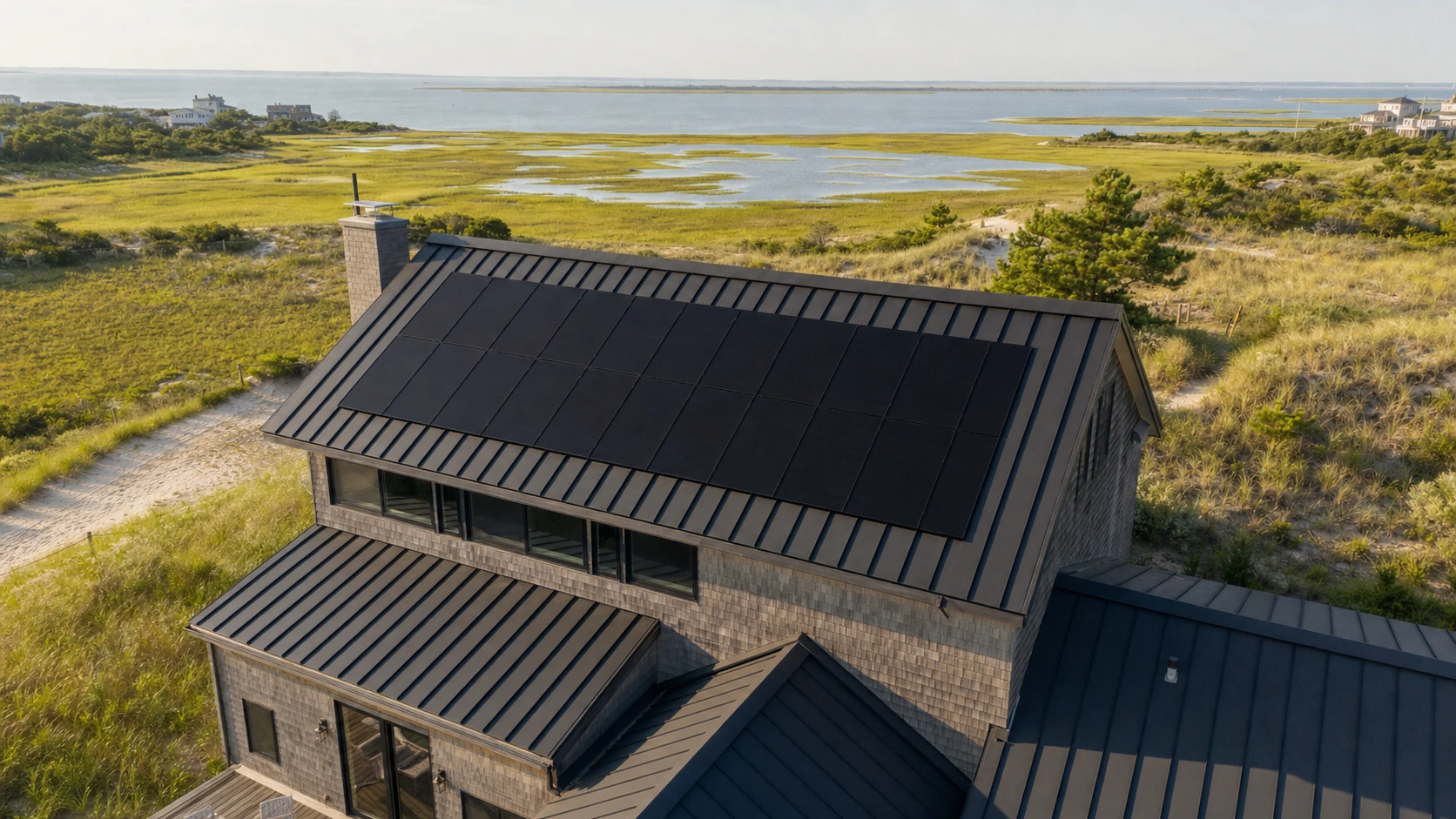
Ask ten neighbors whether their roof can handle solar and you'll hear ten confident answers, most of them wrong. "Metal roofs can't take panels." "Flat roofs don't get enough sun." "My roof's too old, so that's that."
Here's the reality: solar works on nearly every roof type common in New Jersey, and a couple of the "problem" roofs are actually the easiest installs of all. What changes from roof to roof isn't whether solar is possible. It's the mounting method, and occasionally the order of operations. Let's go through them.
Asphalt shingle: the familiar favorite
The majority of NJ homes wear asphalt shingles, and the solar industry grew up installing on them. Mounts anchor into the rafters, and each attachment point is sealed with flashing, the same layered waterproofing principle that keeps every vent and chimney on your roof dry. Done properly, a shingle-roof installation is routine, tidy, and built to outlast the weather.
The only real question for shingle roofs is age, which we'll get to below.
Metal roofs: better for solar than most people think
Now for the myth that deserves the loudest correction. Can you put solar panels on a metal roof? Yes, and it's often the best solar roof there is.
If you have a standing seam metal roof, the raised seams give racking something to grab. Panels attach with clamp-on mounts that require zero holes in your roof. No penetrations, no sealant, nothing to ever re-waterproof. Installers love these roofs for a reason.
Corrugated and exposed-fastener metal roofs work too. Those do involve fastening into the roof structure, but the mounts are gasketed and sealed at every attachment point to keep water out.
There's also a lifespan bonus: a quality metal roof can last 40 to 70 years, which means it will comfortably outlive the solar system on top of it. You'll likely never face the panels-off, reroof, panels-on shuffle that shingle owners eventually schedule.
Flat roofs: bring on the ballast
Plenty of New Jersey homes, additions, and small commercial buildings have flat or low-slope roofs, and solar handles them well. Panels sit on tilted racking that angles them toward the sun, and on many flat roofs the racking is ballasted, held in place by weight rather than penetrations.
Flat roofs offer a hidden perk: because the racking sets the angle, panel orientation isn't hostage to whichever way your roof happens to face. The engineering questions are about weight capacity and wind, which is exactly the kind of thing a site assessment settles.
Tile, slate, and cedar: possible, with caveats
Clay tile and slate are less common on NJ homes, and they're the trickiest hosts: the materials are brittle, so installation requires specialized mounts and careful hands. Cedar shake is generally a poor candidate. If your home wears one of these roofs, it's a conversation for a site assessment rather than a rule of thumb.
The older-roof question: replace first, or wait?
Here's the order-of-operations issue that matters more than any material. Solar panels will sit on your roof for 25+ years. If your roof has less than about 10 years of life left, replace the roof first, then install solar, so the two clocks run together.
This is also where doing both jobs under one contractor pays off. Solar Me handles roof repair and installation alongside solar, so a reroof-plus-solar project is one coordinated job instead of two contractors scheduling around each other. And if your roof needs work years after your panels go up, our removal and reinstallation service takes the array off and puts it back without drama.
Not sure where your roof stands? Our guide to whether your roof is ready for solar walks through the age and condition checklist.
Do solar panels void your roof warranty?
The question nobody seems to answer plainly, so here it is: a properly installed solar system does not void your roof warranty. What actually happens:
- Your roof manufacturer's warranty stays in force for the rest of the roof, the areas untouched by the installation.
- The area around the mounting points becomes the responsibility of your installer's workmanship warranty, which covers the quality of the penetrations and flashing.
- Problems arise only with sloppy work: unsealed holes, missing flashing, or installers who won't stand behind their penetrations. That's a contractor problem, not a solar problem.
Before installation, it's smart to glance at your roofing warranty terms and confirm your installer provides a workmanship warranty covering roof integrity. We explained how workmanship warranties fit alongside product and performance coverage in Solar Panel Warranties Explained.
Frequently asked questions
Can you put solar panels on a metal roof?Yes. Standing seam metal roofs are among the best solar roofs available, using clamp-on mounts that require no penetrations at all. Corrugated metal works with specialized sealed brackets.
What is the best roof for solar panels?Standing seam metal is the installer's favorite for its no-penetration mounting and long lifespan. Asphalt shingle is the proven standard. Flat roofs work well with tilted, often ballasted racking.
Can solar panels go on a flat roof?Yes. Tilted racking angles the panels toward the sun, and ballasted systems hold everything in place with weight instead of holes. Weight and wind loads get confirmed during the site assessment.
Do solar panels void a roof warranty?Not when installed correctly. The roof manufacturer's warranty remains in force, and the installer's workmanship warranty covers the mounting areas. Sloppy, unflashed installations are the only real risk.
Should I replace my roof before going solar?If the roof has roughly 10 or fewer years of life left, yes, replace first so the roof and the panels age together. A contractor that handles both jobs can coordinate them as one project.
Whatever your roof, let's look at it
Shingle, metal, flat, or something in between, the right mounting system almost always exists, and the same company that installs your panels can handle the roof itself. Request a free assessment and get a straight answer about your roof, your timeline, and what solar would look like on top of it.
