

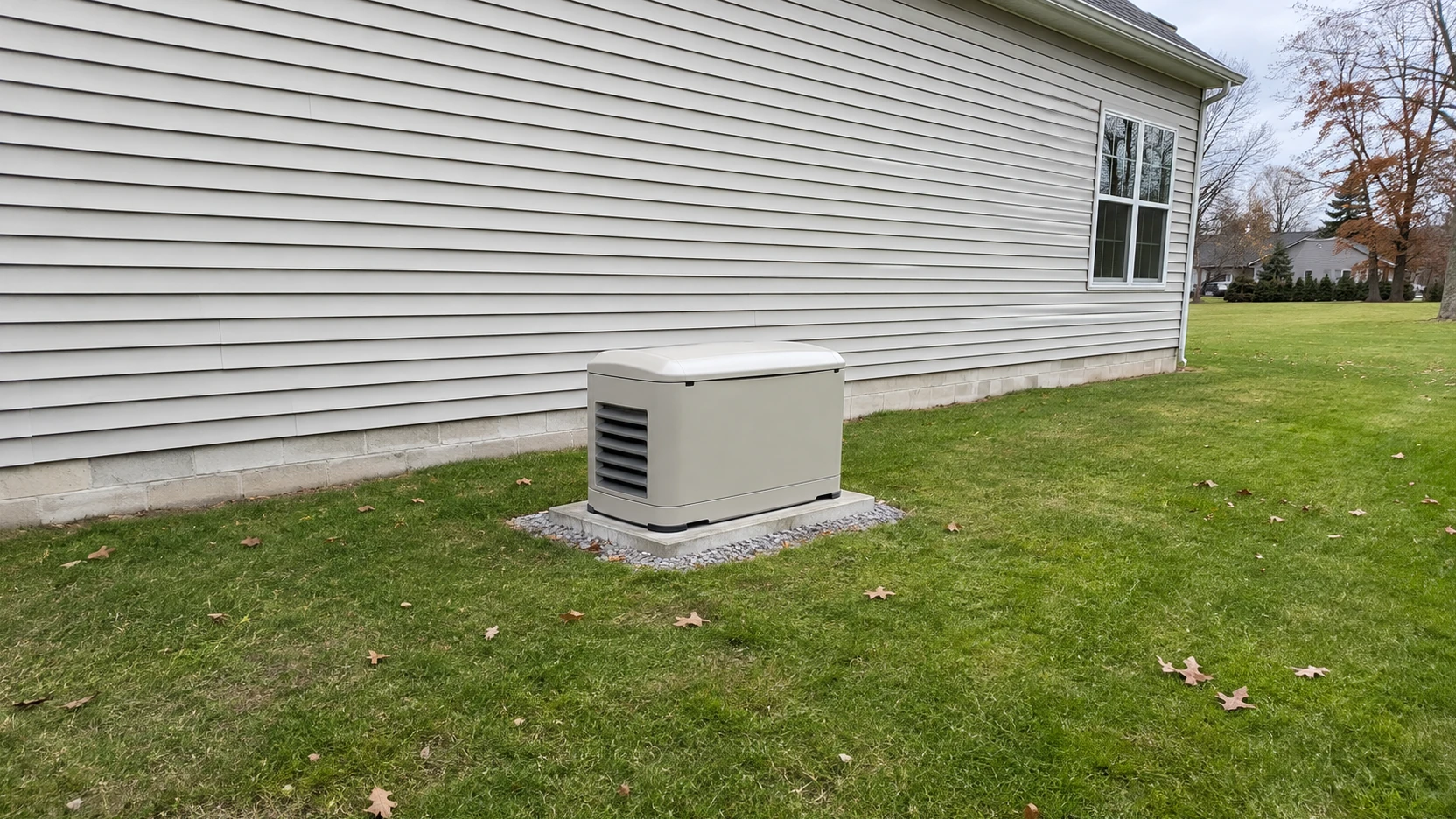
Picking the size of a standby generator gets most of the attention. Picking its spot matters just as much. Placement decides whether the generator is safe, how much the gas and electrical work costs, how loud it is inside your home, and whether it passes inspection.
How far from the house?
Generac's published guidance, based on the national fire safety standard for stationary generators (NFPA 37), calls for:
- From operable windows, doors, vents, and window wells (the dug-out openings around basement windows): 5 feet
- From the back of the generator to the house wall: 18 inches (for models tested and marked for this reduced distance)
- Above the generator (decks, overhangs, branches): 5 feet
- At the front and both ends (including shrubs): 3 feet
Two caveats. The 18-inch wall distance applies only to models that passed a specific fire test; other units need 5 feet from combustible materials. And local codes take precedence. Generac notes that a spot meeting these minimums can still let exhaust drift indoors, so sometimes the unit needs to go farther away.
That matters because engines make carbon monoxide. The 5-foot rule is a minimum, not a target. Near a bedroom window or a door you keep open, more distance is better.
Spots that don't work
- Under a deck, stairs, or roof overhang
- Right under or beside a window, especially a bedroom
- Boxed in by shrubs, with no room for airflow or service
- Inside a garage, shed, or crawlspace
- A low spot where water pools or floodwater could reach
Spots that work (and save money)
Close to the gas meter. A standby generator connects directly to your natural gas line. Longer runs can need larger pipe and cost more. The gas utility also has to confirm your service and meter can supply the generator, and a meter upgrade can add weeks to the timeline.
Close to the electrical panel. The generator connects through a transfer switch (the device that moves your house from utility power to generator power), usually at or near your main panel or electric meter. A shorter run means less wire and labor.
Level, solid ground, out of roof runoff and snow drifts, so the generator has clear air when a storm hits.
Above flood risk. In mapped flood zones, New Jersey rules generally require new mechanical and electrical equipment to sit at or above the design flood elevation, at least one foot above the base flood elevation (the height floodwater is expected to reach in a major flood) and higher in some areas.
Think about noise
Generac rates most of its air-cooled home standby models at about 65 to 67 decibels, measured 23 feet from the front under normal load, and notes other sides can be louder. Point the exhaust away from bedrooms and neighbors, avoid narrow side yards where sound bounces between houses, and set the scheduled self-test for a weekday daytime slot in the controller or the Mobile Link app.
Zoning, setbacks, and HOAs
- Yard location: some New Jersey towns limit generators to rear or side yards, or ban them from front yards.
- Setbacks: many towns require a minimum distance from property lines, which can rule out a narrow side yard.
- Survey: towns commonly ask for your property survey showing the location.
- Homeowners association (HOA): association approval may be required before the town issues a permit.
What permits are involved in NJ?
Standby generators go through your town's construction office under the state's Uniform Construction Code. Requirements vary by town. Verona's published checklist, for example, calls for an electrical permit, a gas piping permit with testing before the electrical inspection, confirmation from the gas utility before purchase, a load calculation, a property survey, and a full test run at final inspection.
Frequently asked questions
How far does a generator need to be from a house?
Generac's guidance calls for at least 5 feet from windows, doors, and vents, and 18 inches from the wall for models tested for that distance. Local codes can require more.
Can a standby generator go under a window?
No. Generac's guidance calls for at least 5 feet from operable windows and doors because exhaust contains carbon monoxide.
Do I need a permit for a standby generator in NJ?
Yes. NJ towns typically require at least an electrical permit and a gas piping permit, with inspections.
Does the generator have to be near the gas meter?
No, but closer is usually cheaper, and the gas utility must confirm your meter can supply it.
Get the spot right the first time
Moving a generator after it's installed usually means new gas piping, new wiring, and another round of permits and inspections. SolarMe installs Generac standby generators across New Jersey, from securing the generator pad to establishing the correct electrical connections, with periodic maintenance checks once it's running. Generac's Mobile Link app lets you check its status from your phone. Still deciding on size? Start with our Generac sizing guide.
Request your SolarMe generator assessment and have your backup power ready before the next outage.
