

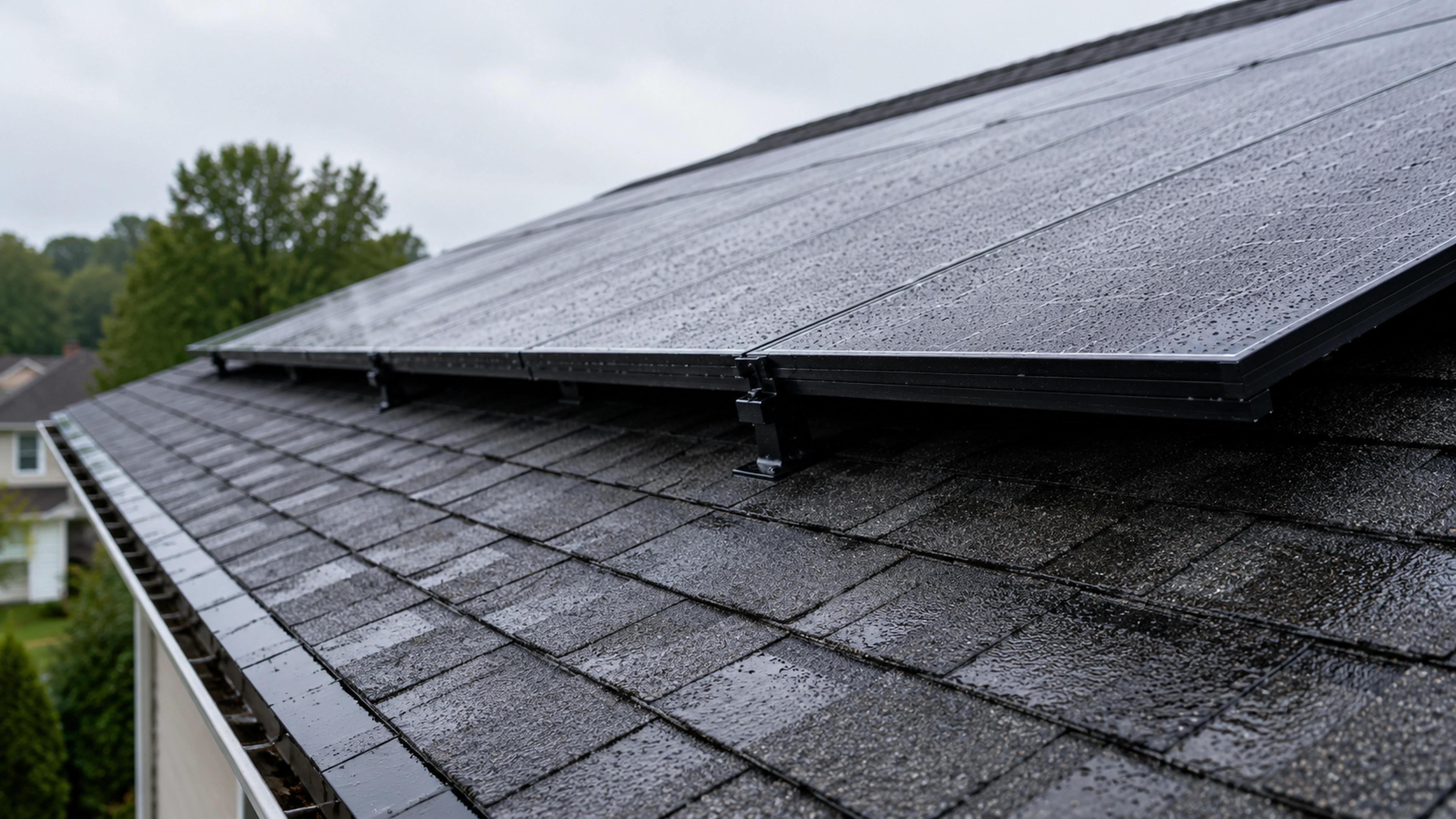
There's a water stain on the ceiling, it's roughly under where the panels are, and now you're wondering whether going solar was a mistake.
Take a breath. Solar panels themselves don't cause roof leaks. Roof penetrations that were installed badly do. A rooftop system on a shingle roof is anchored with a few dozen bolts driven into the rafters, and each of those bolts has to be waterproofed properly. When they are, the roof under a solar array stays as dry as the rest of the house for decades. When they aren't, water finds the gap, sometimes in the first nor'easter and sometimes five years later.
This guide covers how leaks under solar actually happen, how to tell whether that stain is a solar problem or an ordinary roof problem, who's on the hook for fixing it, and how to make sure it never happens on your house.
How a solar installation can leak
Every one of these is a workmanship issue, not a solar issue:
Bolts that missed the rafter. A lag bolt that lands in plywood instead of a rafter has nothing solid to bite into. It can back out over time, and the hole it leaves is an open path for water.
Sealant instead of flashing. Proper practice puts a metal flashing plate under the shingle course above each mount, so water runs over the plate the way it runs over any vent or chimney flashing. Some installers skip the flashing and rely on a bead of sealant alone. Sealant is a backup, not a waterproofing system: it breaks down under sun and weather over time, and it's no long-term substitute for flashing.
Flashing laid on top instead of tucked under. A flashing plate belongs under the row of shingles above it, so water running down the roof passes over it. Laid on top of the shingles, it sends water in the wrong direction. It looks fine from the ground and leaks in the first driving rain.
Cracked shingles from foot traffic. Brittle, older shingles crack when walked on. The crack is often nowhere near a mount, which makes it confusing to diagnose.
Unflashed conduit penetrations. The electrical run from the roof down to the inverter needs the same care as the mounts. We explained the attic-versus-roof routing question in our solar conduit guide.
A roof that was already at the end of its life. Sometimes the panels aren't the cause at all. Worn underlayment (the waterproof layer beneath the shingles) and aging shingles leak on their own schedule, and the array just happens to be sitting on top. This is why we push so hard on checking roof condition before solar goes on.
Why modern hardware rarely leaks
The industry learned these lessons the hard way, and the hardware has caught up. Flashed mounts from manufacturers like IronRidge (one of the racking brands we work with) combine a large flashing plate with a raised seal and a locking cap over the bolt, and are tested against wind-driven rain. Standing seam metal roofs get clamp-on mounts with no penetrations at all, and flat roofs often use ballasted racking, meaning the panels are weighted down rather than bolted. We covered the mounting method for each roof type in Which Roofs Work With Solar in NJ.
With flashed mounts installed by a crew that knows roofing, a solar penetration is no more of a leak risk than a plumbing vent.
How to tell if you have a leak, and where it's coming from
Look in the attic first, not at the ceiling. Water travels along rafters and decking before it drips, so a ceiling stain can be several feet from the actual entry point. In the attic, use a flashlight to check:
- Dark stains or damp wood on the underside of the decking, especially around the tips of the mounting bolts
- Rust on bolt tips or nail heads
- Wet or compressed insulation directly under the array footprint
- Daylight visible around any penetration
Timing is a clue. A leak that shows up within weeks of installation, after the first heavy rain, points to a missed rafter or a flashing problem. A leak that appears years later, especially after a freeze-thaw winter, often means sealant has failed or ice damming has pushed water under the shingles. New Jersey's cycle of daytime melt and overnight refreeze is hard on every roof penetration, solar or not.
Compare to the rest of the roof. If there are also stains near a chimney, a skylight, or the eaves, you likely have a general roofing problem rather than a solar-specific one.
Who's responsible for fixing it
If it's the installation: your installer's workmanship warranty should cover it. Most reputable installers back their roof penetrations for 5 to 10 years, some longer. Read the fine print on whether the coverage extends to water damage inside the house or only to the repair itself; it varies by contract. We broke down how workmanship warranties differ from product and performance warranties in Solar Panel Warranties Explained.
If the installer is gone: a common situation in New Jersey, where several large installers have closed in recent years (Vision Solar's 2024 bankruptcy is one example). A leak under a system whose installer has closed up shop needs two things: a solar company that can safely lift panels, and a roofer who can fix what's underneath. Solar Me does both. Our diagnostics team traces the problem, our removal and reinstallation service moves panels out of the way when the repair requires it, and our roofing crew handles the repair itself.
If it's just the roof aging out: that's an ordinary roofing job, and it may be a candidate for a full replacement with the panels removed and reinstalled.
Insurance: homeowners policies generally cover sudden water damage from storms, but not damage caused by defective installation, which is the installer's liability. More on how solar interacts with your policy in our insurance guide.
How to prevent a leak in the first place
- Get the roof inspected before solar goes on. The common rule of thumb: if it has less than about 10 years of life left, replace it first. Solar Me offers free roofing inspections.
- Ask how the mounts will be flashed. The answer should involve a metal flashing plate under the shingle course, not "we seal every bolt."
- Ask for photos of the penetrations before the panels cover them. A good crew is happy to show its work.
- Check the attic after the first heavy rain post-installation, and again after big storms.
- Have the roof looked at every couple of years. The roofing page recommends inspections at least every two years and after major weather events.
Frequently asked questions
Do solar panels cause roof leaks?Not by themselves. Leaks come from poorly flashed or missed-rafter penetrations, cracked shingles from foot traffic, or a roof that was already failing. Properly flashed mounts installed by a crew that understands roofing don't leak.
How do I know if my roof is leaking because of solar panels?Check the attic under the array for stains, damp decking, rusted bolt tips, or wet insulation. Leaks near the mounts that appear after the first heavy rain following installation usually point to the install; stains elsewhere on the roof point to a general roofing issue.
Who pays to fix a roof leak caused by solar panels?The installer, under its workmanship warranty, if the installation caused it and the warranty is still in force. If the installer is out of business, a company that handles both solar removal and roof repair can do the job under one contract.
Can solar panels be removed to fix a roof leak?Yes. Panels in the affected area are lifted, the roof is repaired or replaced, and the panels go back on. Solar Me offers removal and reinstallation as a dedicated service.
How can I prevent roof leaks when installing solar?Replace an aging roof first, insist on flashed mounts rather than sealant alone, ask for penetration photos, and check the attic after the first big storm.
One call, both problems solved
If there's a stain under your panels, you don't need a solar company and a roofer arguing over whose fault it is. Request a free assessment and we'll find the source, fix the roof, and put your panels back where they belong.
