

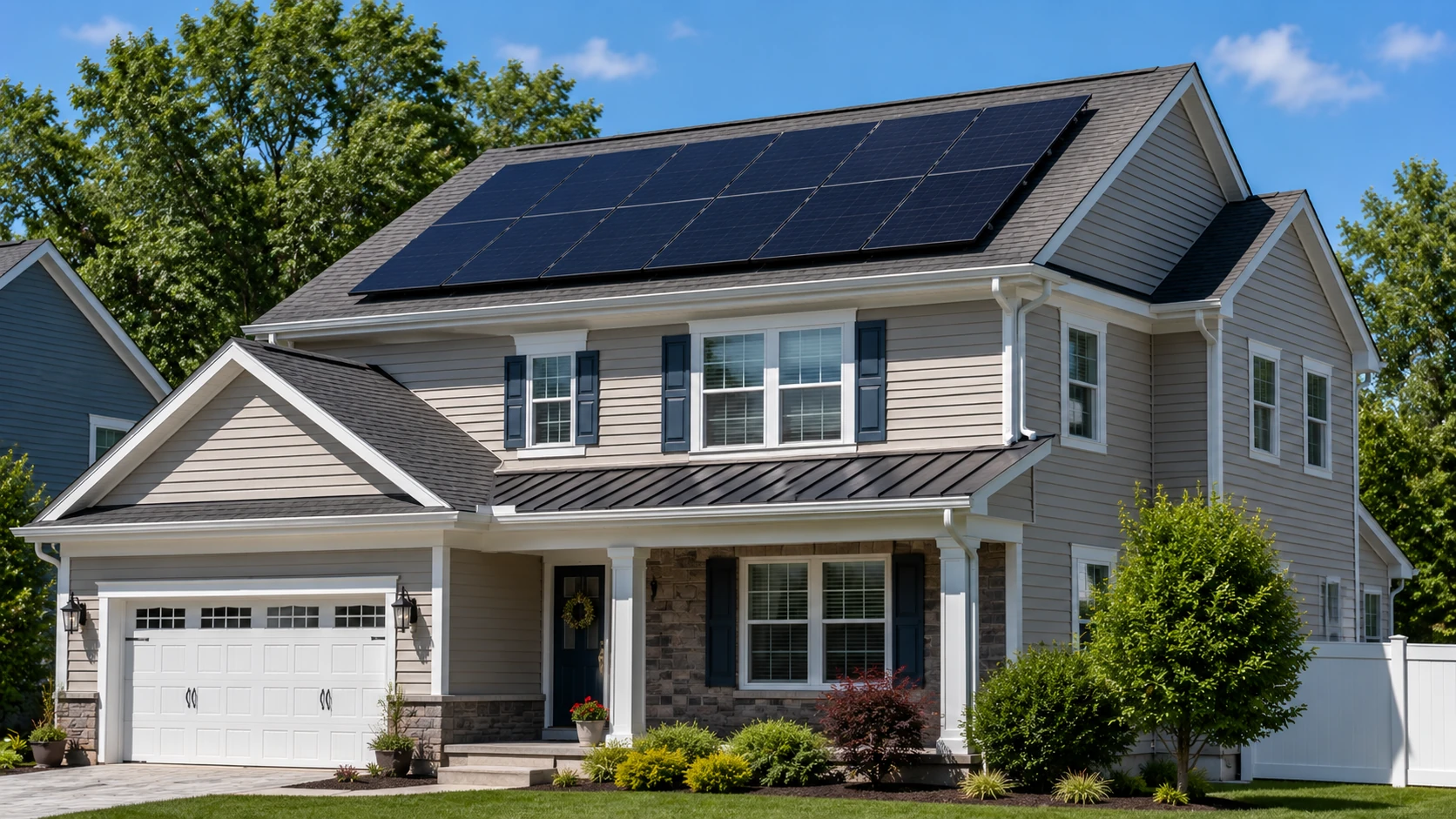
It's a smart question, and a common worry: solar panels add value to your home, and in New Jersey — the state with the highest property taxes in the country — anything that raises your home's value sounds like it could raise your tax bill too.
Here's the reassuring answer: in New Jersey, installing a residential solar system will not increase your property taxes. The state has a specific exemption that protects you. Let's break down how it works and what you need to do to claim it.
The short answer: no, thanks to NJ's solar exemption
New Jersey law includes a Renewable Energy Systems Property Tax Exemption (N.J.S.A. 54:4-3.113). In plain English: the added value that solar panels bring to your home is excluded from your property tax assessment.
So even though your home may be worth more with solar — and studies consistently show solar adds value — your local assessor won't add that solar value to the figure your property taxes are based on. You get the higher home value without the higher tax bill.
Why this matters so much in New Jersey
New Jersey has the highest property taxes in the nation, with a statewide average effective rate around 2% of a home's value — and well over 3% in some towns. Studies have consistently found that an owned solar system can raise a home's resale value, and New Jersey's high electricity costs make solar especially attractive to buyers here.
Without the exemption, that added value could mean higher annual property taxes for as long as you own the system. The exemption removes that downside entirely. It's one of the quieter but more valuable solar benefits New Jersey offers — and it matters even more now that the federal residential tax credit ended after 2025.
How to claim the exemption (it's not automatic)
This is the part homeowners need to know: the property tax exemption is not applied automatically. Unlike New Jersey's solar sales-tax exemption (which simply means you don't pay sales tax on the equipment), the property tax exemption requires a quick filing.
Here's the general process:
- Have your solar system installed by a qualified installer.
- File Form CRES (Application for Certification of Renewable Energy System(s)) with your local municipal tax assessor. This is New Jersey's official form, and it's typically signed by the property owner, the installer, and the local construction official, then certified by the assessor.
- The assessor applies the exemption, excluding the system's added value from your assessment — effective the tax year after the certification is granted.
Once it's in place, you generally don't have to reapply each year — the exemption stays with the system. A good installer can point you to the right form and timing, but the filing happens at the municipal level, so it's always worth confirming the exact steps with your own town's tax assessor.
A quick note: Tax rules vary by municipality and can change. This article is general information, not tax advice — confirm the current process with your local tax assessor or a tax professional before relying on it.
Solar still adds value — you just don't get taxed on it
This is the best of both worlds. Solar panels can make your home more attractive and more valuable to buyers (we cover this in detail in Do Solar Panels Increase Home Value in New Jersey?). The property tax exemption simply means you capture that added value without paying extra taxes on it year after year.
For homebuyers, an owned solar system can be a genuine selling point: lower electric bills, no added property tax burden, and clean energy from day one.
The bigger NJ incentive picture
The property tax exemption is one piece of a still-strong set of New Jersey solar benefits. Even with the federal residential credit gone, NJ homeowners can typically take advantage of:
- The property tax exemption (covered here)
- The sales tax exemption on solar equipment (you don't pay NJ sales tax on the system)
- SREC-II earnings through NJ's Successor Solar Incentive (SuSI) program, which pay you for the clean energy your system produces
- Net metering, which credits you for excess power you send to the grid — see How Net Metering Works in New Jersey
Together, these are what make solar a smart financial move in NJ. For the full current rundown, see our NJ solar incentives overview and our 2026 incentives guide.
Frequently asked questions
Do solar panels increase property taxes in New Jersey?No. New Jersey's Renewable Energy Systems Property Tax Exemption excludes the added value of a residential solar system from your property tax assessment, so your taxes don't go up because of solar.
Do I have to do anything to get the exemption?Yes — it isn't automatic. You (or your installer) file a Certification of Renewable Energy System (Form CRES) with your local municipal tax assessor. Confirm the exact steps with your town.
Does the NJ solar property tax exemption expire?Under current law it has no set expiration and stays with the qualifying system — but always verify current rules with your municipality, since tax laws can change.
Does solar still raise my home's value?Yes. Solar can increase your home's market value — you simply aren't taxed on that added value thanks to the exemption.
Is there still a federal tax credit for solar in 2026?The federal residential solar tax credit (Section 25D) ended on December 31, 2025, so homeowners who buy a new system in 2026 no longer receive it. (If your system was installed in 2025 or earlier, you may still be able to claim or carry forward that credit — check with a tax professional.) New Jersey's state-level benefits, however, remain in place.
Thinking about going solar in NJ?
Between the property tax exemption, the sales tax exemption, SRECs, and net metering, New Jersey is still one of the best states to go solar. Solar Me can show you exactly what your home qualifies for and help with the paperwork along the way. Request a free, no-pressure consultation to see your numbers.
